AONL’s Releases Third Section of its Workforce Compendium

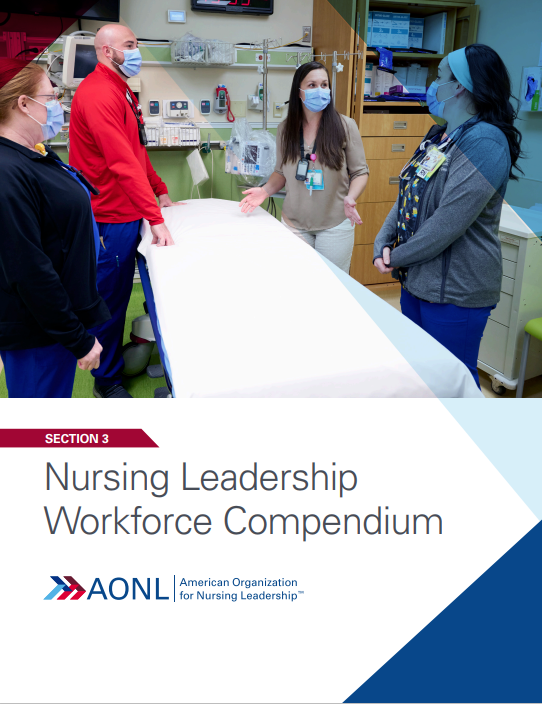
The American Organization for Nursing Leadership (AONL) has released the final section of its Nursing Leadership Workforce Compendium.

This section focuses on:

  • Academic-practice partnerships
  • Culture of inquiry
  • Total rewards

According to AONL, the report is intended to “support and empower nurse leaders to thrive, engage in ongoing professional development and sustain environments where nurses want to work and feel they belong.”

The full Compendium can be found here.

MHA Launches New Workforce Toolkit

The workforce crisis continues to affect healthcare organizations of all types and at every level of employment.

In July 2022, MHA hosted its first-ever Workforce Summit to allow leaders to share the innovative strategies and practices they are using to grow, recruit, and retain healthcare workers across the care continuum in the commonwealth.

At the summit, leaders from acute, post-acute, and behavioral health settings, as well as the state’s Executive Office of Labor and Workforce Development, discussed the current environment and shared strategies and lessons learned to build, develop, and maintain a strong, purposeful, and diverse workforce.

Building on the success of the event, MHA developed this interactive toolkit to share just a few of the best and emerging practices to address current workforce challenges.

Key sections include:


Watch the video introduction:

How Nurses at Tufts Turned Patient Mobility into a Workforce Solution

When nurses at Tufts Medical Center saw that patient mobility was clinically essential but operationally difficult, they didn’t accept the gap — they redesigned the work. Through the Nursing Workforce Solutions program, a team of direct care nurses created a dedicated Mobility Tech role that improves patient outcomes while easing nursing workload burden. Here’s how structured nurse-led innovation is transforming care from the bedside up.

Read the full article here.

WWCMA- MA Hospitals Recipients of Five of the Six Gold Awards.

Worksite Wellness Council of Massachusetts (WWCMA) announced the winners of its annual WorkWell Massachusetts Awards program aimed to recognize Massachusetts employers for their exemplary work in worksite health promotion. Five of the six Gold Award recipients were MA hospitals. As well as of only two Innovator Awards, one was a MA hospital.

The Worksite Wellness Council of Massachusetts (WWCMA) is the preeminent, independent, and objective resource for health promotion in the workplace. A 501c3 not-for-profit member organization, WWCMA champions wellness programs that help employers encourage healthy employees, healthy families, and healthy communities across the Commonwealth.

Read more…

New Pain Relief Protocol at Our Lady of Fatima Hospital

Our Lady of Fatima Hospital, Health Care Partners, a 359-bed facility in North Providence, Rhode Island, in April 2015 undertook a pilot program with an orthopedic surgeon in the hopes of decreasing post-operative pain and supporting early mobility.

The hospital added the periarticular multimodal drug injection (PMDI) component to its multimodal analgesia protocol for total hip and knee replacement. PMDI is a mixture of medications usually consisting of ropivacaine, Ketorolac, and adrenaline delivered into the posterior capsule of the knee or hip joint, resulting in better pain relief, less opioid use, larger range of motion, and lower rates of nausea and vomiting. Inadequate pain control following total joint replacement surgery can lead to secondary medical complications such as venous thromboembolic and cardiac events.

Our Lady of Fatima’s departments of anesthesia, orthopedics, pharmacy, rehabilitation, and performance improvement educated staff and clinicians regarding the implications and benefits of PMDI. The hospital’s anesthesia, pharmacy, nursing, and physical therapy units began a collaborative effort to audit patient response to posterior capsule peri-articular local injection for a small sample of total joint replacement patients. They developed an audit tool to collect data on mobility through discharge, pain level prior to physical therapy and with gait, cumulative narcotic use in each patient, post-operative indwelling Foley use, and length of stay.

Over a period five months a total of 27 elective total joint replacement procedures received PMDI. Outcome data was compared to baseline data obtained in a retrospective chart audit which reviewed the same surgeon’s total knee and hip replacement patients one year prior to the pilot study.

The use of local joint anesthetic and spinal anesthesia in conjunction with PMDI resulted in increased mobility, decreased average pain score during physical therapy, and decreased length of stay for both total hip replacement and total knee replacement. The time for “break-through” pain – that is, when an individual experiences spikes of pain that breaks through the coverage provided by the pain reliever – was reduced for total knee replacement, but stayed about the same for hip replacement under the new pain relief protocol.

As a result of this pilot study, the practice of using PMDI has become a standardized process at Our Lady of Fatima Hospital as it has enhanced overall patient satisfaction, pain management and discharge functional status.

Westerly Hospital Improves Patient Safety with Staff Education & Interactive Malignant Hyperthermia Drills

Westerly Hospital–a 125 bed facility in Rhode Island that is part of the Yale New Haven Health System— has implemented a robust Malignant Hyperthermia education program designed to improve staff’s ability to recognize a Malignant Hyperthermia event and initiate appropriate, life-saving treatment; thereby, increasing patient safety and quality of care. Additionally, staff will be able to recognize the risk factors for a potential Malignant Hyperthermia event and implement a safe plan of care for susceptible patients.

Malignant Hyperthermia (MH) is a rare, life-threatening clinical syndrome of hypermetabolism which may be triggered by volatile inhalational anesthetic agents and the muscle relaxant succinylcholine in susceptible individuals. In efforts to improve patient safety, The Joint Commission requires that staff participate in ongoing education and training to maintain or increase their competency during a Malignant Hyperthermia crisis in every area of the facility where triggering agents may be administered.

Westerly Hospital assembled an interdisciplinary team to ensure that the hospital’s policies and procedures aligned with the Malignant Hyperthermia Association of the United States guidelines and to design an educational plan for staff. The online Healthstream© module “Identifying and Treating Malignant Hyperthermia” was assigned to nurses, pharmacists and surgical techs employed in all perioperative, procedural, inpatient, Emergency Department, Intensive Care, and pharmacy areas. Interactive Malignant Hyperthermia (MH) drills were held in varying locations throughout the hospital. MH Drill evaluations assisted the team to drive continual process improvement in real time.

Each participant was asked to complete a survey to assess their knowledge of and comfort level with responding to a Malignant Hyperthermia crisis before and after completion of the learning module and the Malignant Hyperthermia Drill. The survey results demonstrated a nearly threefold improvement in the number of staff members who reported a “very substantial” or “substantial” knowledge and comfort level in responding to these critical events after completing the educational program.

Click here for survey results…

Anecdotally, as a direct result of Westerly Hospital’s education efforts, a registered nurse in the Preadmission Testing area recently identified a patient with several Malignant Hyperthermia risk factors and immediately worked with the anesthesiology and perioperative teams to create a safe plan of care for his surgery.

BMC Links Patients to Outpatient Addiction Treatment Services

Caregivers at Boston Medical Center (BMC) have released a study outlining how the hospital’s Addiction Consult Service (ACS) may be making a significant dent in the problem of inpatients with substance use disorder (SUD) relapsing into addiction – and being readmitted – shortly after discharge.

Numerous studies have shown that many inpatients (15% by one Massachusetts study) have an active SUD, and that they’re likely to be readmitted within 30 days of discharge. But treating a patient for substance use disorder in addition to whatever other forms of treatment the hospital is providing often does not occur.

“Barriers to inpatient initiation of medications for [opioid use disorder] include the limited availability of outpatient providers and programs, lack of insurance coverage, and federal privacy regulations that make coordinating and integrating medical and addiction care difficult,” BMC researchers wrote in the Journal of Substance Use Treatment.

To address the problem, BMC created its Addiction Consult Service in July 2015. The physician-RN ACS team meets with the patient, provides brief bedside counseling, initiates addiction-treatment medications, and formulates discharge planning.

“Discharge work for the ACS included collaborating with the primary hospital medical team, social work, and hospital case management, as well as coordination with and linkage to post-discharge addiction providers,” according to the study. “The ACS regularly collaborated with social work within the hospital and held weekly joint rounds with the Psychiatry Consult and Liaison service.”

Two BMC outpatient clinics and three local methadone clinics were the main post-discharge linkages.

BMC reports that over the first 26 weeks, the ASC received 367 referrals resulting in 337 consults. (Some patients left against medical advice, refused to be seen, etc.)

“Like heart disease can cause a heart attack or a stroke, addiction causes many acute injuries requiring immediate attention, but we can’t simply treat that issue without delving deeper to address the root cause,” said Alex Walley, MD, MSc, a general internist at BMC’s Grayken Center for Addiction who also oversees the addiction medicine fellowship. “Our goal is to engage willing patients in treatment and work with them on a plan that will keep them healthy and safe now and in the future.”

MHA’s V.P. of Clinical Affairs Pat Noga, RN, FAAN, who is involved in the association’s work on opioids, said BMC’s ACS work is well-known within the caregiving community and provides a template for work by other hospitals or state efforts going forward.

Click on the link to read the full study: Addiction consultation services – Linking hospitalized patients to outpatient addiction treatment.

And click here to read about the efforts of MHA’s Substance Use Disorder Prevention and Treatment Task Force that has developed guidelines for hospital to use in addressing the opioid crisis.

Newton-Wellesley Hospital’s Journey to High Reliability

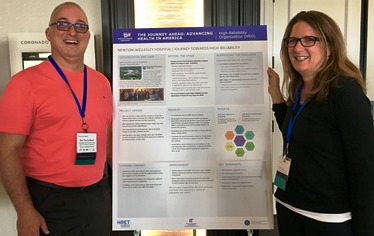
Newton-Wellesley Hospital’s Bert Thurlo-Walsh, R.N., MM, CPHQ, Assoc. CQO/V.P., Patient Experience & Medical Staff Services and Dr. Janet C. Larson, Chief Quality & Experience Officer were invited to the Health Research and Educational Trust (HRET) Hospital Improvement Innovation Network (HIIN) The Journey Ahead national conference in San Diego last month to present their hospital's poster on their journey to become a high reliability organization (HRO).  

 The HRET/HIIN conference preceded the American Hospital Association’s leadership conference.poster presentation on the hospital’s journey to become a high-reliability organization (HRO) was featured

HIIN comprises 32 state hospital associations, including MHA, and more than 1,600 hospitals collaborating to reduce inpatient harm and readmissions. For participating hospitals, HIIN provides, among other benefits, guidance and assistance for becoming an HRO.

High-reliability organizations operate in complex, high-hazard domains for extended periods without serious accidents or catastrophic failures. To become an HRO, an organization does not merely follow certain best practice processes for improving safety, but also changes its culture, ensuring that everyone on staff is ever-mindful of the need to relentlessly prioritize safety.

Newton-Wellesley’s presentation outlined its challenges—executive leadership changes and solid but stagnant patient experience and staff engagement scores—and the following steps taken toward becoming an HRO:

  • Dr. Michael R. Jaff, who became Newton-Wellesley Hospital president in October 2016, immediately made the delivery of high-quality, safe care with a great experience a primary strategy for the hospital. To achieve this strategy, Dr. Jaff focused the team on high-reliability and the elimination of harm.
  • Jaff created two new positions—Chief Quality & Experience Officer and Associate Chief Quality Officer, VP of Patient Experience and Medical Staff Services—to lead the high-reliability strategy.
  • Newton-Wellesley leveraged other hospitals in the Partners HealthCare System that had already undertaken the high-reliability journey to learn about their experiences. A core team at Newton-Wellesley then drew up strategic plans for each component of the HRO framework, along with a roadmap for implementation of each tactic.
  • Throughout the process, the hospital participated in MHA’s Clinical Issues Advisory Council and the MHA-led HIIN. It completed the Joint Commission’s Center for Transforming Healthcare ORO 2.0 tool to assist with further defining the roadmap.
  • Newton-Wellesley also added Patient Family Advisory Council members to the Patient Safety Steering Committee, and the Experience/Engagement Work Group.

The Newton-Wellesley team underscored the following key takeaways:

  • First and foremost, the journey toward HRO has no end; rather it is a continuous, never-ending journey.
  • Top leadership needs to make HRO a focus.
  • It’s important to set the quality goal as “zero harm.”
  • It is imperative to develop a “roadmap” for implementation and to use robust process improvement tools to hold leadership and staff accountable.
  • Adding patient and family advisory council members to the process through active participation in key committees also proved invaluable to Newton-Wellesley’s effort.

RI’s Westerly Hospital’s Remarkable Infection-Reduction Performance Zero

That’s the number of central line-associated bloodstream infections (CLABSI) that Westerly Hospital in Rhode Island has experienced in both its ICU and medical/surgery units from 2015 to today. Its performance in containing catheter-associated urinary tract infections (CAUTI) is equally as remarkable; in the hospital’s ICU and med/surg units there has been just one CAUTI, in the ICU, since 2016.

Westerly Hospital – a 125-bed facility that is part of Yale New Haven Health system – implemented a nurse-driven protocol to combat CAUTI. The hospital used guidelines developed by the Healthcare Infection Control Practices Advisory Committee (HICPAC) – the federal panel that advises the Centers for Disease Control and Prevention (CDC). From that, Westerly developed a CAUTI prevention algorithm for registered nurses to use, essentially to help them decide: does the patient still need the catheter or should it be removed? Such a determination could be based on a patient, say, being transferred from an ICU to another unit.

RNs assess patients on a daily, or shift, basis and follow best practices relating to removal protocols. Daily interdisciplinary rounds include reviews of all patients with urinary catheters to verify clinical indications.

“An important component is having online learning modules that educate the staff on the procedures,” said Patricia Egan, Westerly’s Nursing Professional Development Specialist. “The modules also produce a transcript that managers can use to verify that each person in the unit has passed the online lessons.” Staff were also trained in the use of the algorithm in 1:1 sessions with Nurse Leaders and Professional Development Staff.

To prevent CLABSI, Westerly set up learning stations which are essentially mock patients so that managers could observe staff performing “hands on” central IV line care and maintenance. Staff were also educated on best practices and participated in on-line learning modules. The hospitals also implemented daily Chlorhexidine Gluconate (CHG) bathing for all patients with central lines – which is recommended best practice by the CDC.

Westerly’s infection fighting strategy was developed by an inter-disciplinary team consisting of the Quality and Risk Management department, front line RNs, and Nurse Leaders. The successes are shared with staff through Westerly’s Infection Prevention Committee.

“New staff are trained on the procedures, and now that we are two years into our successful program, we are re-training all staff,” Egan said. “The program has been good for our staff, good for the hospital by avoiding value-based penalties, but especially beneficial for our patients.”

BID-Needham Sustaining Change: Creating a Hospital Culture of Safety

In 2013, during a period of significant institutional growth, Beth Israel Deaconess Hospital–Needham (BID–Needham) began an organization-wide effort to enhance its commitment to patient safety, employee engagement, and patient and staff satisfaction.

As a result if its efforts, BID-Needham’s scores on the AHRQ Culture of Safety Survey rose to the 98th percentile rank within one year of implementation and have been sustained since then, with the hospital’s 2016 survey scores remaining in the 96th percentile. This effort was led by the hospital’s executive leadership team with the engagement and full support of the board of directors.

For its efforts, BID–Needham was the winning entry in the “Enhancing Culture and Leadership” category of the 2017 MHA Compass Awards. Entries in each of the six Compass Award categories were voted on by non-Massachusetts judges from across the U.S., who assessed the entries “blind” – meaning there were no details to identify the hospital competing.

Since 2010, BID–Needham has conducted, through an approved vendor, the Culture of Safety survey. In 2013, the hospital set out to evaluate the hospital’s culture and the physicians’ and employees’ feelings about workplace satisfaction. Over the next year, a comprehensive evaluation of existing processes, procedures and behaviors was conducted throughout the hospital with a message to all staff and physicians of a renewed commitment to patient safety and staff engagement to find solutions.

Following the broad assessment, a hospital initiative entitled “Drive” was developed in partnership with leadership and direct line staff members. Drive focused on leadership development and accountability, employee engagement, and improving the patient experience. As part of the cultural transformation process, goals included increasing transparency and consistency of communication, creating a just and learning culture and encouraging confidence in the safety event reporting system and follow-up. Multi-disciplinary workgroups were implemented and included leadership and direct care givers. Commitment to patient safety was always central to the goals.

Since implementing the initiative BID–Needham has seen sustainment of staff confidence in the safety culture as well as improved job satisfaction. Additionally, because of the improved transparency of communication and teamwork, the hospital is able to respond more quickly and be proactive when it identifies potential problems via monthly quality surveillance (e.g., fall prevention, skin integrity, and medication events). Patient satisfaction, through HCAHPS scores, has seen consistent improvement.

Asked in the Compass Award application to list the three lessons learned, BID–Needham wrote: 1) Leadership and Board support are essential for driving transformational changes; 2) Staff engagement and partnership with leadership is essential to driving sustainable change; and 3) Transformational change occurs with commitment and organizational purpose.