


Recorded webinar available here…
Category: Uncategorized
Caring for the Caregiver: Behavioral Health Workforce
Recorded webinar available here…
Caring for the Caregiver: Workforce Development and Pipeline
Recorded webinar available here…
Creating Safer Workplaces
Overview:
Hospital and health system leaders who continually emphasize the importance of physical and psychological well-being promote cultures that heighten safety in their organizations. They embed procedures into daily operations to instill a safety mindset at all levels, entrench security and safety functions in their enterprise strategies, and design their organizations to maximize safety. They also collaborate broadly and creatively across their institutions to prioritize these efforts.
As part of this guide, we offer leaders and implementers case studies that exemplify how a range of organizations have addressed workplace violence using both best practices and individual solutions that can be tailored based on an organization’s size, resources and culture.
Safe Patient Handling

Overview:
One major source of injury to healthcare workers is musculoskeletal disorders (MSDs). In 2017, nursing assistants had the second highest number of cases of MSDs. There were 18,090 days away from work cases, which equates to an incidence rate (IR) of 166.3 per 10,000 workers, more than five times the average for all industries. This compares to the all-worker days-away from work rate of 30.5 per 10,000 workers.
Caring for the Caregiver: Webinar Series, Safety – Session 2
Recorded webinar available here…
NAM launches AHA-supported resource compendium for health care worker well-being
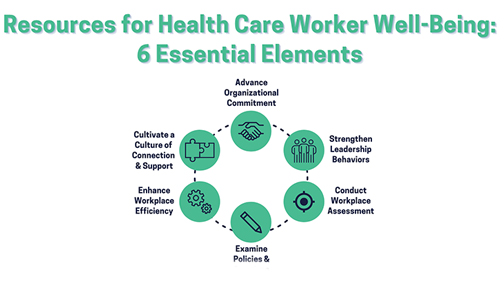
NAM launches AHA-supported resource compendium for health care worker well-being. The National Academy of Medicine today launched Resource Compendium for Health Care Worker Well-Being, which highlights tools that are ready to be deployed and strategies to address systems issues related to health care workers’ burnout. The compendium, which is a product of the Action Collaborative on Clinician Well-Being and Resilience, of which AHA is a participant, organizes resources into six essential elements: advancing organizational commitment; strengthening leadership behaviors; conducting workplace assessments; examining policies and practices; enhancing workplace efficiency; and cultivating a culture of connection and support.
Roundtable Discussion: Caring for the Healthcare Workforce
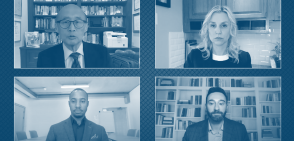
In July of 2022, NEJM Catalyst held a roundtable discussion on “what health care organizations can do to effectively prevent clinician burnout and promote well-being.”
Panelists included:
- Bryant Adibe, MD, Sugarman Practitioner in Residence and Visiting Fellow, Kahneman-Treisman Center for Behavioral Science and Public Policy, Princeton University
- C. Virginia O’Hayer, PhD, Clinical Associate Professor, Department of Psychiatry and Human Behavior, Thomas Jefferson University Sidney Kimmel Medical College
- Baligh Yehia, MD, MPP, FACP, Senior Vice President, Ascension
- Thomas H. Lee, MD, MSc, Chief Medical Officer, Press Ganey Associates
National Academy of Medicine, Action Collaborative on Clinician Well-Being and Resilience
The recording, presentations, and chats are now available from the recent meeting on Clinician Retention in the Era of COVID: Uniting the Health Workforce to Optimize Well-Being, which aimed to learn from those who have developed pathways forward with well-being as the key. Read more
AHA: “Expanding the Reach” Workforce Strategies Guide

The AHA has released the fourth section of its workforce strategies guide, which is designed to help hospital and health system leaders navigate workforce challenges and opportunities. It focuses on hiring veterans, professional governance models, and academic-practice partnerships.
The guide was informed by the AHA Board of Trustees’ Task Force on Workforce and includes strategies, resources, and case studies from hospitals and health systems across the country.
Section 1 offered strategies and resources to support workforce wellbeing and behavioral health and prevent workplace violence. Section 2 focused on data and analytics, as well as technological supports. Section 3 focused on recruitment and retention, diversity and inclusion, and creative staffing models.
View AHA’s workforce webpage to download the all four sections of the guide, as well as additional resources.