


This change package is a summary of themes from the successful practices of high performing health organizations across the country. It was developed through clinical practice sharing, organization site visits and subject matter expert contributions. This change package includes a menu of strategies, change concepts and specific actionable items that any hospital can choose to implement based on need or for purposes of improving patient quality of life and care. This change package is intended to be complementary to literature reviews and other evidence-based tools and resources.
Author: admin
Dementia Friendly Massachusetts Initiative – Statement of Values

As more individuals and organizations recognize the need to make our communities work better for the growing number of people living with Alzheimer’s or a related disorder, and their families and friends (“care partners”), it is helpful to define what it means to work toward becoming a “dementia-friendly” community.
ALZConnected – A Place to Share Concerns & Get Advice

ALZConnected® , powered by the Alzheimer’s Association®, is a free online community for everyone affected by Alzheimer’s or another dementia, including:
- People with the disease
- Caregivers
- Family members
- Friends
- Individuals who have lost someone to Alzheimer’s
What is the Cycle of Violence?
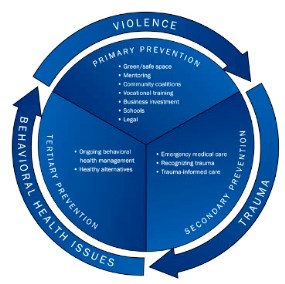 According to the AHA/ACHI Hospital Approaches to Interrupt the Cycle of Violence guide, exposure to violence significantly increases the likelihood of an individual being a perpetrator of violence or experiencing repeated violent injury in the future, creating an ongoing cycle of violence.
Prevention poses a challenge because violence occurs as part of a cycle of learned behaviors that are further perpetuated by an individual’s exposure to trauma. Though it may appear to be an intractable problem, violence can be prevented by addressing the underlying socioeconomic, environmental and behavioral risk factors that increase the likelihood that an individual will become a victim or perpetrator of violence.
Hospitals can play an important role at each level of prevention. By partnering with community stakeholders, hospitals can implement primary prevention approaches to address risk factors at the relationship, community and society levels and help prevent violence from occurring.
Through the Eyes of the Workforce: Creating Joy, Meaning, & Safer Health Care
Workplace safety is inextricably linked to patient safety. Unless caregivers are given the protection, respect, and support they need, they are more likely to make errors, fail to follow safe practices, and not work well in teams. A new report from the Lucian Leape Institute looks at the current state of health care as a workplace, highlights vulnerabilities common in health care organizations, discusses the costs of inaction, and outlines what a healthy and safe workplace would look like. The report concludes with seven recommendations for actions that organizations need to pursue to effect real change.
Dementia Friendly America
Through the work of over 35 national, leading organizations, the Dementia Friendly America initiative is catalyzing a movement to more effectively support and serve those across America who are living with dementia and their family and friend care partners. The lead organizations represent all sectors of community and are collectively leveraging their national reach to activate their local affiliates, members and branches to convene, participate in and support dementia friendly community efforts at a local level.
Dementia Friendly Massachusetts Initiative
An estimated 5.4 million people in the United States and more than 120,000 Massachusetts residents are living with dementia, which is a general term for changes in thinking such as memory loss and difficulty planning and communicating. Dementia may be caused by Alzheimer’s disease or other conditions. Despite the widespread impact of dementia, lack of information, fear, and stigma can prevent those affected from feeling safe, socially connected, and able to thrive in their communities.
CDC’s Get Ahead of Sepsis Campaign

The Centers for Disease Control and Prevention launched Get Ahead of Sepsis, an educational initiative to protect Americans from the devastating effects of sepsis. This initiative emphasizes the importance of early recognition and timely treatment of sepsis, as well as the importance of preventing infections that could lead to sepsis.
Sepsis is the body’s extreme response to an infection. It is life-threatening, and without timely treatment, sepsis can rapidly lead to tissue damage, organ failure, and death. Each year in the U.S., more than 1.5 million people develop sepsis, and at least 250,000 Americans die as a result.
Public education is critical to save lives since, for many patients, sepsis develops from an infection that begins outside the hospital.
Get Ahead of Sepsis calls on healthcare professionals to educate patients, prevent infections, suspect and identify sepsis early, and start sepsis treatment fast. In addition, this work urges patients and their families to prevent infections, be alert to the symptoms of sepsis, and seek immediate medical care if sepsis is suspected or for an infection that is not improving or is getting worse.
“Detecting sepsis early and starting immediate treatment is often the difference between life and death. It starts with preventing the infections that lead to sepsis,” said CDC Director Brenda Fitzgerald, M.D. “We created Get Ahead of Sepsisto give people the resources they need to help stop this medical emergency in its tracks.”
Get Ahead of Sepsis offers exciting new resources for healthcare professionals and patients – including fact sheets, brochures, infographics, digital and social media, and shareable videos for both the healthcare professional and for the consumer.
NCOA – Falls Prevention Conversation Guide
Why is falls prevention important?
FALLS ARE COMMON
Falls are the leading cause of fatal and non-fatal injuries for older Americans.
1 in 4 older adults falls each year.
Every 11 seconds, an older adult is treated in the emergency room for a fall.
Every 19 minutes, an older adult dies from a fall.
FALLS CAN CAUSE SERIOUS INJURIES
Falls result in injuries, such as hip fractures, broken bones, and head injuries. In fact, more than 2.8 million older adults are treated in emergency departments annually because of a fall, resulting in over 800,000 hospitalizations.
FALLS ARE COSTLY
The average hospital cost for a fall injury is over $30,000. Falls, with or without injury, carry a heavy burden on quality of life.
After a fall, many older adults develop a fear of falling and, as a result, limit their activities and social engagements.
Fear of falling can result in further physical decline, depression, social isolation, and feelings of helplessness.
FALLS IMPACT CAREGIVERS, TOO
Research has shown that after a care recipient’s first fall, caregivers report a significant increase in caregiver burden, fear of falling, and depression.
Seasonal Influenza A (H3N2) Activity & Antiviral Treatment of Patients with Influenza
In the United States (U.S.), influenza activity has increased significantly over recent weeks with influenza A(H3N2) viruses predominating so far this season. In the past, A(H3N2) virus-predominant influenza seasons have been associated with more hospitalizations and deaths in persons aged 65 years and older and young children compared to other age groups. In addition, influenza vaccine effectiveness (VE) in general has been lower against A(H3N2) viruses than against influenza A(H1N1)pdm09 or influenza B viruses. Last season, VE against circulating influenza A(H3N2) viruses was estimated to be 32% in the U.S.
CDC expects that VE could be similar this season, should the same A(H3N2) viruses continue to predominate. For this reason, in addition to influenza vaccination for prevention of influenza, the use of antiviral medications for treatment of influenza becomes even more important than usual. The neuraminidase inhibitor (NAI) antiviral medications are most effective in treating influenza and reducing complications when treatment is started early. Evidence from previous influenza seasons suggests that NAI antivirals are underutilized in outpatients and hospitalized patients with influenza who are recommended for treatment.
Resources:
CDC guidance about antiviral treatment and prophylaxis for influenza can be found here.
CDC guidance about flu diagnosis can be found here.
The recently redesigned MDPH Flu website has information for providers and the general public. Click on ‘Information for Healthcare and Public Health Professionals’ for such provider resources as influenza control guidance, model standing orders, screening forms and planning clinics and campaigns.
Click here for the CDC Health Advisory on Seasonal Influenza A(H3N2) Activity and Antiviral Treatment of Patients with Influenza