National Quality Forum’s (NQF) Opioids & Opioid Use Disorder Technical Expert Panel (TEP) Final Report

Through this report, the National Quality Forum (NQF) offers the Centers for Medicare & Medicaid Services (CMS) and other stakeholders a review of healthcare quality measures (QM) relevant to addressing America’s opioid crisis. The report considers issues related to acute and chronic pain management and substance use disorders (SUD). It answers two guiding questions: (1) What are the priority gaps in QM science that need to be filled in order to reduce opioid use disorders (OUD) and opioid overdose deaths without undermining effective pain management? (2) What existing and conceptual measures should be deployed in the following types of federal medical payment programs to best address the opioid crisis moving forward: Merit-Based Incentive Payment System (MIPS), alternative payment models (APMs), the Medicare Shared Savings Program (SSP), the Hospital Inpatient Quality Reporting Program (IQR), and the Hospital Value-Based Purchasing Program (VBP)?

The conclusions of this report emerged from an NQF-facilitated consensus development process engaging a 28-member Technical Expert Panel (TEP). The TEP was composed of physicians, nurses, patients, pharmacists, and others with expertise and experience in pain management and OUD. CMS funded this work pursuant to enabling legislation from the U.S. Congress, the 2018 Substance Use-Disorder Prevention that Promotes Opioid Recovery and Treatment for Patients and Communities (SUPPORT) Act Section 6093. Ultimately, the guidance proffered here aims to achieve the application of the proper healthcare quality metrics across the U.S. healthcare system. Using the best metrics, in turn, aims both to continue to reduce opioid deaths verifiably, to encourage the implementation of best practices of pain management, to decrease the incidence of other SUDs, and to decrease illegal drug use by those unable to obtain prescription pain medication.

Read report here…

MA Coalition for Serious Illness Care – Good Talk Campaign

Based on the Coalition’s public messaging research, we have developed the Good Talk Toolkit to be a resource that supplements your organization’s capacity to build awareness and understanding for advance care planning. The messaging and campaign included here are intended to shift the frame of advance care planning away from end of life and life-sustaining treatment choices towards goals of care, quality of life and shared decision making thus also bringing it into closer alignment with palliative care principles.

Additional Information and Resources for Good Talk Campaign

Falls Prevention Conversation Guide for Caregivers

Caregivers, let’s talk about keeping you and your family safe and active.
It seems like common sense — everybody falls, no matter what age. However, for many older adults, an unexpected fall can result in a serious and costly injury. The good news is that most falls can be prevented. As the caregiver, you have the power to reduce your loved one’s risk of falling, and your own fall risk as well.

You can be a partner and a participant in falls prevention. This conversation guide has many purposes. Use this guide as a tool of empowerment in your role as a caregiver. Use it if you or the person you are caring for has had a fall, is experiencing decreased mobility, is unsteady on their feet, or is fearful of falling. When needed, use it to talk with other members of your family or health care professionals about
creating a falls prevention action plan.

Read more….

ONL’s Nursing Summit 2019 Follow-up Survey Report

In January 2019, ONL, together with nine other professional nursing organizations led a first-of-its-kind Nursing Summit in central Massachusetts that brought together 380 Registered Nurses to hear their concerns and feedback and enhance trust among nurses. With a robust amount of data from the Nursing Summit, ONL sought to gain further understanding and insight from Nursing Summit participants by conducting an online survey of attendees. The survey included questions about the themes that emerged during the Summit and how participants have implemented what they learned during the Summit in their organizations. One hundred and one (N=101) participants completed the survey, and many offered detailed responses. ONL is committed to an inclusive process involving many perspectives within the nursing community and is grateful to all the participants who took the survey.

Read more...

MHQP Introduces New Resource to Help Empowered Patients

Healthcare leaders around the country recognize that engaging patients through collaborative and personalized care is a key to reducing costs and improving outcomes.

To advance this cause, Massachusetts Health Quality Partners (MHQP), with the help of its Consumer Health Council (CHC), has created a new section on the MHQP website dedicated to supporting patients who wish to become more actively involved in their care and more engaged consumers of healthcare services.

The experienced patient advocates and activists on MHQP’s CHC took more than two years to research and compile the most helpful tools, guidelines and information related to patient engagement, and have now assembled and organized them for easy access for consumers on MHQP’s website.

“Finally, all of the best resources to help patients be more engaged and more empowered are available in one single place,” said Nancy Finn, a healthcare journalist and member of the CHC who helped lead the effort.

Among the specific categories in the resource are:

  • What It Measures to Be an Engaged Patient
  • Your Health Insurance Coverage and Options
  • Talking About Healthcare Costs
  • Communicating with Your Clinicians and Other Healthcare Providers
  • Collaborating with Your Clinician to Plan Your Care

And many more…

“Our healthcare system is unduly complicated and extremely difficult to navigate,” said MHQP President and CEO Barbra Rabson. “This is an essential roadmap to help patients interact with their providers and with the healthcare system at large. We are so grateful to the volunteers on our CHC for dedicating so much time and effort to create this resource to benefit patients everywhere.”

MHQP sees this resource as an important element in shared decision-making and care planning. It was developed primarily to target patients who would most benefit from being more engaged in their care, such as those with chronic and/or high-cost conditions, and those with a new diagnosis who may be unfamiliar with navigating a new part of the healthcare system.

“We hope healthcare providers refer their patients to this resource and recommend that patients use it on their own, as a way to encourage them to become more actively involved,” said Rabson.

Read more…

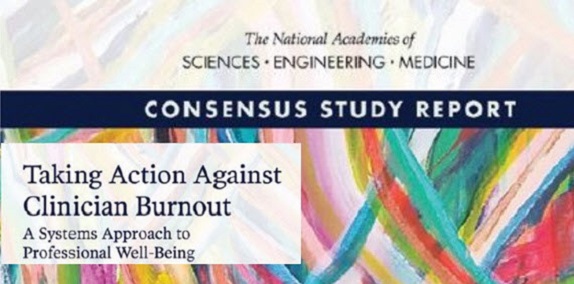
Recommendation: Taking Action Against Clinician Burnout

GOAL 1. CREATE POSITIVE WORK ENVIRONMENTS: Transform health care work systems by creating positive work environments that prevent and reduce burnout, foster professional well-being, and support quality care.

GOAL 2. CREATE POSITIVE LEARNING ENVIRONMENTS: Transform health professions education and training to optimize learning environments that prevent and reduce burnout and foster professional well-being.

GOAL 3. REDUCE ADMINISTRATIVE BURDEN: Prevent and reduce the negative consequences on clinicians’ professional well-being that emanate from laws, regulations, policies, and standards promulgated by health care policy, regulatory, and standards-setting entities, including government agencies (federal, state, and local), professional organizations, and accreditors.

GOAL 4. ENABLE TECHNOLOGY SOLUTIONS: Through collaboration and engagement of vendors, clinicians, and expert health information technology system developers, develop health information technologies to support clinicians in providing high-quality patient care.

GOAL 5. PROVIDE SUPPORT TO CLINICIANS AND LEARNERS: Reduce the stigma and eliminate the barriers associated with obtaining support needed to prevent and alleviate burnout symptoms, facilitate recovery from burnout, and foster professional well-being among learners and practicing clinicians.

GOAL 6. INVEST IN RESEARCH: Provide dedicated funding for research on clinician professional well-being.

Read more…

Taking Action Against Clinician Burnout: A Systems Approach to Professional Well-Being

The changing landscape of the U.S. health care system – how care is provided, documented, and reimbursed – has had profound effects on clinical practice and the experiences of the professionals who provide patient care (“clinicians”), students and trainees in the clinical learning environment (“learners”), and patients and their families. Mounting system pressures have contributed to an imbalance in which the demands of the clinician’s job are greater than the resources available to complete the job effectively.

This job demand–job resource imbalance is intensified by the increasing push for performance improvement, technology that hinders rather than supports patient care, changing professional and societal expectations, and policies that are insufficiently aligned with professional values or the goal of better patient care. Adding to these health system pressures is an explosive increase in medical data and a growing demand for health care as the U.S. population ages and many disciplines experience workforce shortages. Overwhelming job demands and insufficient job resources cause physical, psychological, and emotional stress, including burnout – a workplace syndrome that is characterized by high emotional exhaustion, high depersonalization (i.e., cynicism), and a low sense of personal accomplishment from work.

Studies estimate that between 35 percent and 54 percent of U.S. nurses and physicians have substantial symptoms of burnout, and the range for medical students and residents is between 45 percent and 60
percent.

Read more…

How Nurses at Tufts Turned Patient Mobility into a Workforce Solution

When nurses at Tufts Medical Center saw that patient mobility was clinically essential but operationally difficult, they didn’t accept the gap — they redesigned the work. Through the Nursing Workforce Solutions program, a team of direct care nurses created a dedicated Mobility Tech role that improves patient outcomes while easing nursing workload burden. Here’s how structured nurse-led innovation is transforming care from the bedside up.

Read the full article here.

Worksite Wellness Council Announces Employer Award Winners

The Worksite Wellness Council of Massachusetts has announced the winners of its annual WorkWell Massachusetts Awards, recognizing employers that show outstanding performance in worksite health promotion, which includes programs to address workers’ physical and mental health, social connectedness, community involvement, and financial security.

The application process for the awards asked employers to complete the HERO Health and Well-Being Best Practices Scorecard in Collaboration with Mercer to assess an organization’s overall wellness programming. A supplemental application requested additional details on strategic planning, organizational support, program design and implementation, participant engagement, and measurement/evaluation process. A peer review committee of independent industry experts evaluated all applications and provided a free consultative assessment of the programs

The following MHA members are 2019 WorkWell Massachusetts Award winners:

Gold: Cambridge Health Alliance, Dana-Farber Cancer Institute, and Signature Healthcare.

Silver: Berkshire Health Systems, Boston Medical Center, and UMass Memorial Health Care

Community leader (Those that lead activities that have a profound effect on the health and wellness of a community): Boston Medical Center

More information is available at WWCMA WorkWell MA. Information on the application process for the 2020 WorkWell Massachusetts Award Program will be available in the early spring or can be requested by e-mailing awards@wwcma.org.