It’s a celebration of the strength of the recovery community and a reminder that treatment for substance use disorder works.
Learn more and stay tuned for how MHA is helping recognize this important #RecoveryMonth .
It’s a celebration of the strength of the recovery community and a reminder that treatment for substance use disorder works.
Learn more and stay tuned for how MHA is helping recognize this important #RecoveryMonth .
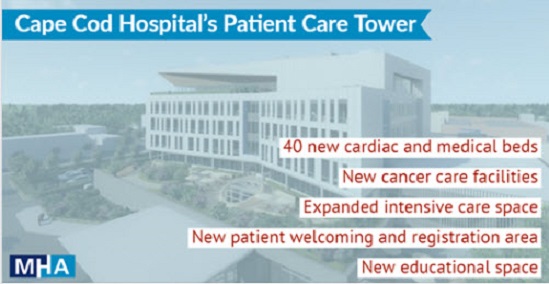
Big news from Cape Cod Healthcare! Vision 2022, announced on the eve of the 100th anniversary of Cape Cod Hospital, includes a new 6-story patient care tower.
Hebrew SeniorLife and Brown University have received a five-year $53.4 million grant from the National Institute on Aging (NIA) to lead a comprehensive, nationwide effort to address Alzheimer’s disease and related dementias. NIA is a division of the National Institutes for Health.
The funding will support the creation of a research incubator or “collaboratory”, bringing together 30 research institutions throughout the United States to conduct pilots to test non-drug, care-based interventions for people living with dementia, and also to develop best practices for implementing and evaluating interventions for Alzheimer’s and dementia care and share them with the research community.
Dr. Susan Mitchell, senior scientist at Hebrew SeniorLife’s Hinda and Arthur Marcus Institute for Aging Research and professor of medicine at Harvard Medical School is co-leader of the collaboration, along with Dr. Vincent Mor, professor of health services, policy and practice at Brown’s School of Public Health.
Pilot projects throughout the country will benefit from the collaboratory’s experts, who will assist with ethical concerns (such as how to secure informed consent from people living with dementia); technical support and generation of data on participant populations; statistics and project design; advice on how to measure patient- and caregiver-reported outcomes; dissemination of results and efforts to maximize the likelihood of implementation; partnering with healthcare systems interested in conducting trials; project administration; training for junior researchers; inclusion of and applicability to people of all backgrounds and cultures; and best practices to engage people interested in this work, including people living with dementia and their caregivers.
“It’s time for Alzheimer’s and other dementias to receive the same level of research focus and investment as cancer,” said Louis Woolf, HSL president and CEO. “We’re proud to collaborate with Brown University to address this national epidemic that affects not only patients, but their families and caregivers as well.”
What we need to do differently to generate enthusiasm and increase participation.
There is definitely an art to creating enthusiasm and generating participation in your company’s worksite wellness initiative.
From our perspective, based on practices of Well Workplace Award winning companies, we suggest organizing your participation with the some ideas.
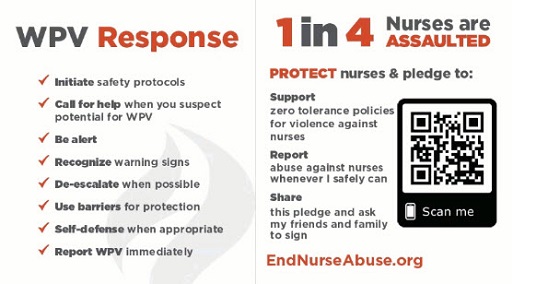
Download, read and share ANA’s #EndNurseAbuse Resource Guide and commit to reporting all abuses that you encounter.
Reporting Incidents of Workplace Violence Effective Date: 2019 Overview
The rate of violence against health care workers has reached epidemic proportions. According to a 2012 report by the U.S. Government Accountability Office (GAO), health care workers in inpatient facilities experienced workplace violence-related injuries requiring days off from work at a rate at least five to 12 times higher than the rate of private-sector workers overall. This type of violence includes incidences of violence against registered nurses (RNs) by patients, patients’ family members and external individuals, and it includes physical, sexual and psychological assaults.
The American Nurses Association (ANA) convened a professional issues panel to develop policy and identify strategies to address barriers to nurses and other health care workers reporting violence and abuse, and to strengthen ‘zero-tolerance’ policies.
This under-reported epidemic has devastating results on the healthcare industry. Studies show that WPV can affect the quality of care and care outcomes, contribute to the development of psychological conditions, and reduce the RN’s level of job satisfaction and organizational commitment.
Section 104 of Chapter 208 of the Acts of 2018 creates the Section 35 Commission and directs the commission, in part, to evaluate and develop a proposal for a consistent statewide standard for the medical review of individuals who are involuntarily committed due to an alcohol or substance use disorder pursuant to section 35 of chapter 123 of the General Laws. The commission’s full scope is available here.
With regard to the commission’s charge to develop a standard for the release of medical information, MHA convened a workgroup of hospital legal and clinical staff from across the commonwealth. MHA’s goal was to develop consistent statewide standards for the medical information required to be released to court clinicians; MHA had heard members’ concerns about the different processes courts follow for submission of medical documentation in support of a Section 35 petition, as well as medical staff confusion when interacting with more than one court. Please note that the following materials are designed to supply the courts with necessary medical information, and were not developed to change the overarching Section 35 process.
MHA worked closely with the Trial Court and DMH court clinicians to ensure the information would be acceptable and helpful to the courts when making a determination on the petition, and with care coordination following the court hearing. In addition, MHA worked with Dave Szabo, a partner, co-chair of the healthcare practice, and member of the privacy group at MHA’s member law firm Locke Lord, to provide a legal memo outlining the legal permissions within federal and state laws for sharing the information to the courts in the manner outlined in the attached materials.
The materials we are requesting members use include:
In January 2019, Organization of Nurse Leaders, MA, RI, NH, CT, VT (ONL) led ten nursing organizations through a Nursing Summit in central Massachusetts to bring nurses together, hear their concerns and feedback, and enhance trust among nurses. The Nursing Summit focused on engaging clinical nurses, listening, and elevating their voice. Every person in the room was a Registered Nurse (RN). By design, all roles and titles were removed from name badges to eliminate hierarchy and enhance open and honest dialogue about the state of nursing. The Nursing Summit was an opportunity to celebrate professional nursing and to remind ourselves why we chose this profession and why we decide to stay.
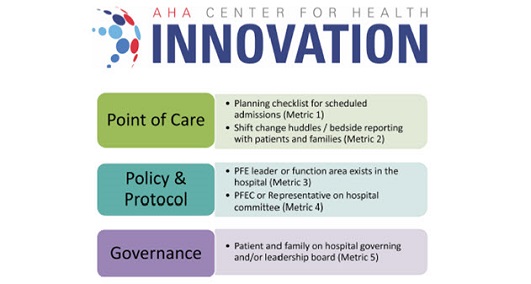
This table can be used to identify possible change ideas to help you embed PFE strategies into your Hospital Acquired Pressure Injury (HAPI) prevention efforts. The examples below are designed to assist you in addressing the goals for each of the five PFE metrics while focusing on specific topic areas of the HAPI prevention bundle.