AHA Issue Brief: Building a Safe Workplace and Community — Mitigating Risk of Violence

The American Hospital Association’s Hospitals Against Violence (HAV) initiative hosted the American Society for Health Care Risk Management (ASHRM) for a facilitated dialogue to explore challenges and current strategies to mitigate the risk of violence. The discussion fostered an exchange of ideas and solutions that informed this issue brief and accompanying case studies.
From AHA:

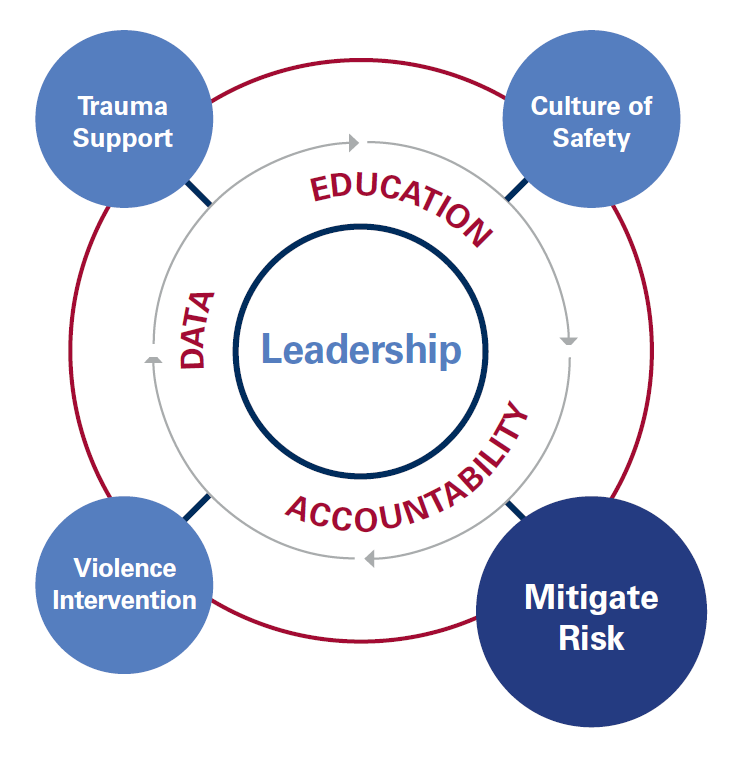
In 2021, HAV developed the Building a Safe Workplace and Community framework to guide health care leaders in their efforts to prevent and mitigate violence.

This issue brief examines risk mitigation and marks the first in a series that expand on each domain of the framework: culture of safety, violence intervention, trauma support and risk mitigation. This issue brief is an outgrowth of a series of discussions between hospital and risk management leaders. The brief shares considerations when assessing potential risks, strategies to mitigating violence and insights on making the care environment safer.

View the issue brief here.

HRET Culture of Safety Change Package

This change package is a summary of themes from the successful practices of high performing health organizations across the country. It was developed through clinical practice sharing, organization site visits and subject matter expert contributions. This change package includes a menu of strategies, change concepts and specific actionable items that any hospital can choose to implement based on need or for purposes of improving patient quality of life and care. This change package is intended to be complementary to literature reviews and other evidence-based tools and resources.

What is the Cycle of Violence?


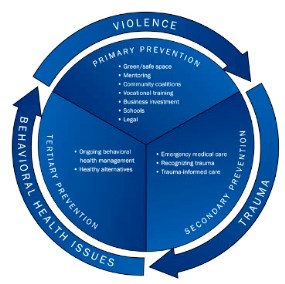
According to the AHA/ACHI Hospital Approaches to Interrupt the Cycle of Violence guide, exposure to violence significantly increases the likelihood of an individual being a perpetrator of violence or experiencing repeated violent injury in the future, creating an ongoing cycle of violence.

Prevention poses a challenge because violence occurs as part of a cycle of learned behaviors that are further perpetuated by an individual’s exposure to trauma. Though it may appear to be an intractable problem, violence can be prevented by addressing the underlying socioeconomic, environmental and behavioral risk factors that increase the likelihood that an individual will become a victim or perpetrator of violence.

Hospitals can play an important role at each level of prevention. By partnering with community stakeholders, hospitals can implement primary prevention approaches to address risk factors at the relationship, community and society levels and help prevent violence from occurring.

Read the entire report here...

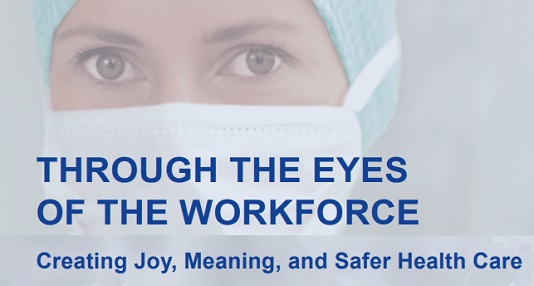
Through the Eyes of the Workforce: Creating Joy, Meaning, & Safer Health Care

Workplace safety is inextricably linked to patient safety. Unless caregivers are given the protection, respect, and support they need, they are more likely to make errors, fail to follow safe practices, and not work well in teams. A new report from the Lucian Leape Institute looks at the current state of health care as a workplace, highlights vulnerabilities common in health care organizations, discusses the costs of inaction, and outlines what a healthy and safe workplace would look like. The report concludes with seven recommendations for actions that organizations need to pursue to effect real change.

Read full report...

Seasonal Influenza A (H3N2) Activity & Antiviral Treatment of Patients with Influenza

In the United States (U.S.), influenza activity has increased significantly over recent weeks with influenza A(H3N2) viruses predominating so far this season. In the past, A(H3N2) virus-predominant influenza seasons have been associated with more hospitalizations and deaths in persons aged 65 years and older and young children compared to other age groups. In addition, influenza vaccine effectiveness (VE) in general has been lower against A(H3N2) viruses than against influenza A(H1N1)pdm09 or influenza B viruses. Last season, VE against circulating influenza A(H3N2) viruses was estimated to be 32% in the U.S.

CDC expects that VE could be similar this season, should the same A(H3N2) viruses continue to predominate. For this reason, in addition to influenza vaccination for prevention of influenza, the use of antiviral medications for treatment of influenza becomes even more important than usual. The neuraminidase inhibitor (NAI) antiviral medications are most effective in treating influenza and reducing complications when treatment is started early. Evidence from previous influenza seasons suggests that NAI antivirals are underutilized in outpatients and hospitalized patients with influenza who are recommended for treatment.

Resources:

CDC guidance about antiviral treatment and prophylaxis for influenza can be found here.

CDC guidance about flu diagnosis can be found here.

The recently redesigned MDPH Flu website  has information for providers and the general public. Click on ‘Information for Healthcare and Public Health Professionals’ for such provider resources as influenza control guidance, model standing orders, screening forms and planning clinics and campaigns.

Click here for the CDC Health Advisory on  Seasonal Influenza A(H3N2) Activity and Antiviral Treatment of Patients with Influenza

American Hospital Association’s Hospital Against Violence Campaign

The AHA 's Hospitals Against Violence Hope (#HAVhope) Friday is a digital media campaign focused on bringing national attention to ending all forms of violence and encouraging hospitals, health systems and community organizations to stand together against violence. Become a supporter by tweeting or submitting a photo that highlights your efforts of combatting violence in the community you serve.

Eugene WoodsThe June 9 HAVhope Day of Awareness is an outgrowth of a Hospital Against Violence campaign initiated by the AHA Board of Trustees to give voice to hospital efforts that combat violence in their communities and their facilities. While violence is different from one community to another, it has become a major public health and safety issue for nearly everyone in our country. In fact, according to the Centers for Disease Control and Prevention (CDC), more than 2.3 million people are treated in U.S. emergency departments each year for violent injuries and violence costs more than $85 billion annually in medical expenses and lost productivity. What is constant, however, is the commitment of hospitals and health systems in helping their employees, patients and communities address violence in whatever form it may take.

Quick Facts:

More than 55,000 deaths and 2.5 million violence-related injuries occur every year (AHA)
On average, nearly 20 people per minute are physically abused by an intimate partner in the United States (NCADV)
12 percent of nonprofit hospitals identified community violence prevention as a priority need in their community health needs assessment (AHA)

Podcasts on Violence Prevention

As part of the Hospitals Against Violence campaign, the AHA interviewed various hospitals across the country that have institutionalized a violence prevention program upon learning violence is a prominent health issue in the communities they serve. Listen to some initiatives hospitals have adopted to combat violence in their community.

AHA’s Combating Violence in Our Communities and Our Hospitals

Our communities must work together to combat all forms of violence, now viewed as one of the major public health and safety issues throughout the country. Community action programs such as those being undertaken by our nation’s hospitals and health systems (alone and with others) are needed now more than ever to help address violence and the toll it takes on our communities and hospital colleagues.

Explore  AHA's Cost of Community Violence to Hospitals and Health Systems in this July 2017 Report   for information on national, state and local efforts to help end violence in our communities, and to help hospitals.


Job Opportunities

Job Seekers:

Find your next Massachusetts hospital or health care job on MAHospitalCareers.com! Sponsored by the Massachusetts Hospital Association, MAHospitalCareers.com helps you locate jobs in nursing, physical therapy, radiology, orthopedics and much more. Search for health care jobs, register for free emailed job alerts, research Massachusetts hospitals and learn about Massachusetts healthcare licensing and regulations. Best of all, everything is free for all health care professionals!


Massachusetts Hospitals:

Are you looking for qualified health care professionals for your Massachusetts hospital? MAHospitalCareers.com can help. As a service of Massachusetts Hospital Association, MAHospitalCareers.com connects thousands of nurses, doctors and other hospital job seekers with Massachusetts hospitals each year.

2019 MHA-ONL Nursing Survey Executive Summary

Massachusetts Health & Hospital Association

and

Organization of Nurse Leaders | New England

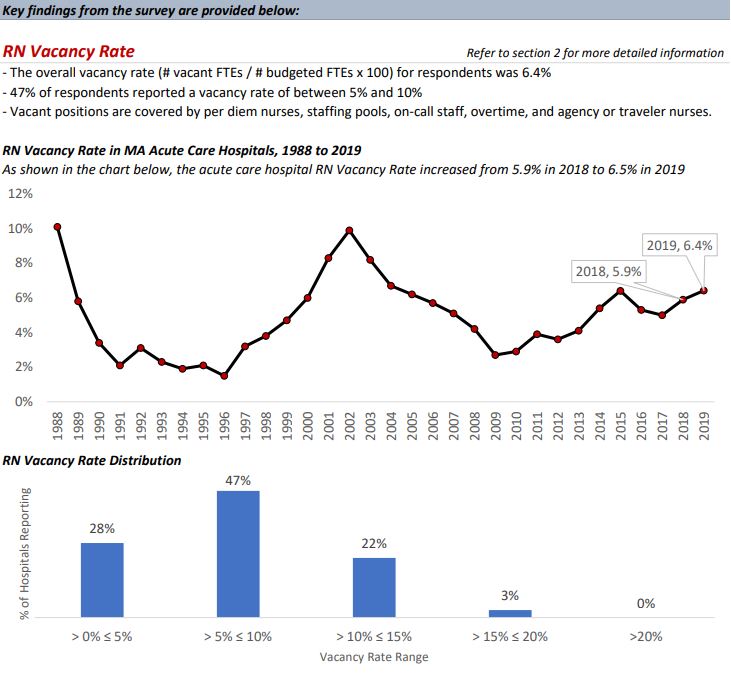
The MHA/ONL 2019 Survey on Hospital Nurse Staffing Issues in Massachusetts was conducted to assess the current hospital-based nursing marketplace in the Commonwealth. The questions were designed to elicit information on nursing staff vacancies, nurse recruiting experiences, workload Management, nursing staff turnover, and union representation of hospital nursing staff.

The survey was sent to acute, speciality, and non-acute hospitals.

45 acute care hospitals representing 71% of total acute care hospitals responded to the survey.
5 non-acute care hospitals representing 36% of total non-acute care hospital responded to the survey.

Click here to view the Executive Summary

Resources for Clinicians and Support Staff

Seasonal Influenza A (H3N2) Activity & Antiviral Treatment of Patients with Influenza

In the United States (U.S.), influenza activity has increased significantly over recent weeks with influenza A(H3N2) viruses predominating so far this season. In the past, A(H3N2) virus-predominant influenza seasons have been associated with more hospitalizations and deaths in persons aged 65 years and older and young children compared to other age groups. In addition, influenza vaccine effectiven…» Full Article


Through the Eyes of the Workforce: Creating Joy, Meaning, & Safer Health Care

Workplace safety is inextricably linked to patient safety. Unless caregivers are given the protection, respect, and support they need, they are more likely to make errors, fail to follow safe practices, and not work well in teams. A new report from the Lucian Leape Institute looks at the current state of health care as a workplace, highlights vulnerabilities common in health care organizations, discusses the costs of inaction, and outlines what a healthy and safe workplace would look like. The report concludes with seven recommendations for actions that organizations need to pursue to effect real change.Read full report…